



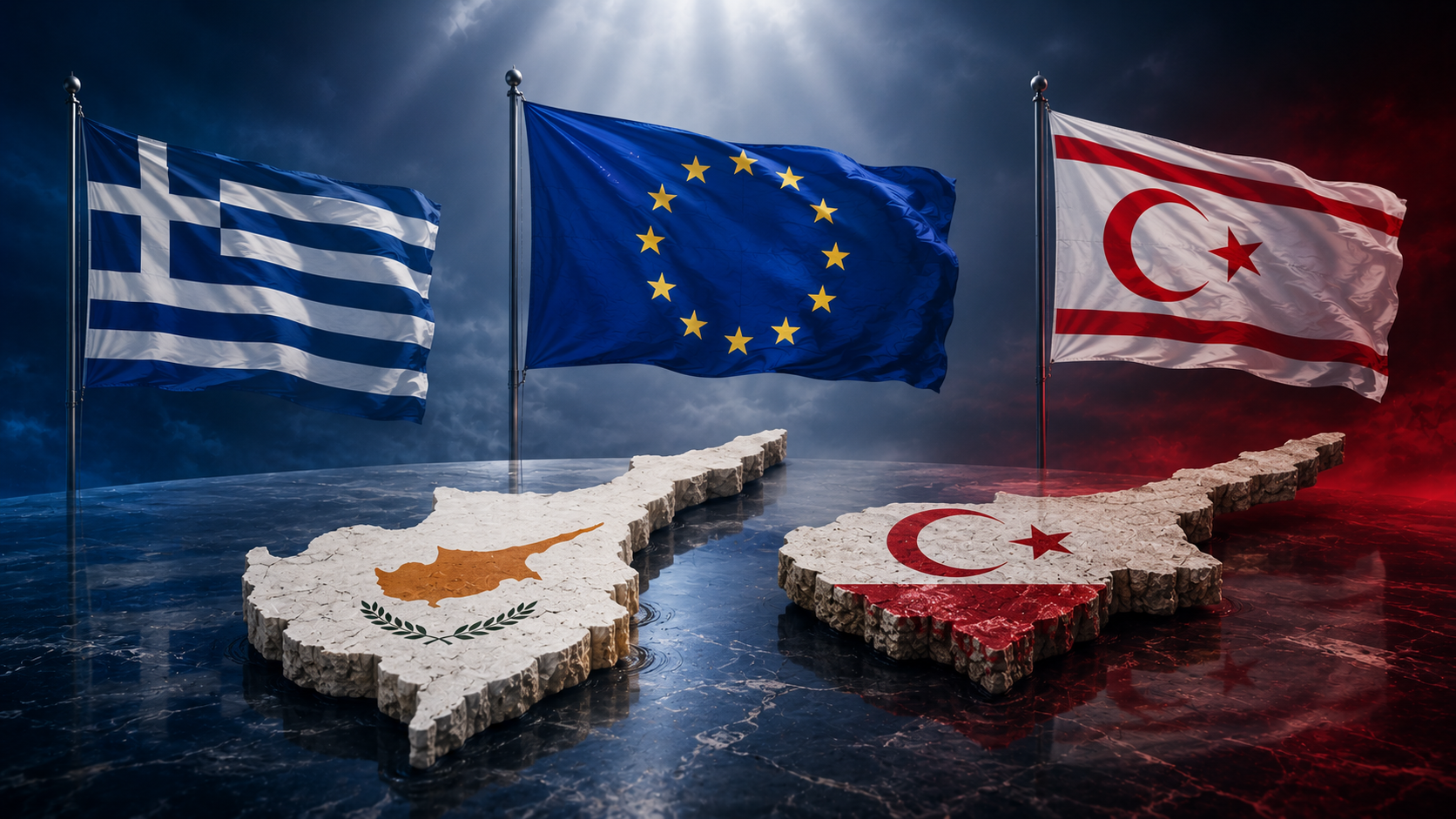

The European Union’s appointment of Italian politician Raffaele Fitto as its Special Representative for Cyprus has sparked political controversy after details of a past corruption case resurfaced alongside strong objections from North Cyprus. While South Cyprus welcomed the appointment as a positive step toward advancing dialogue on the divided island, authorities in North Cyprus dismissed the appointment, arguing that the decision ignored the political will of Turkish Cypriots and undermined any claim of impartiality.
The renewed attention surrounding Fitto’s judicial history has added another layer of debate to an already sensitive diplomatic issue, with critics questioning whether the EU’s choice of envoy will strengthen or further complicate efforts to revive negotiations over Cyprus.
Past Corruption Case Returns to Public Attention
Initial Conviction Was Ultimately Overturned
According to publicly available Italian court records, Raffaele Fitto was initially convicted in a corruption-related case involving public administration. The ruling resulted in a four-year prison sentence and a five-year ban from holding public office.
However, the case continued through Italy’s judicial appeals system. Higher courts later reduced the sentence before Italy’s Court of Cassation, the country’s highest court, ultimately overturned the conviction and acquitted Fitto, bringing the criminal proceedings to a close.
As a result, Fitto currently holds no criminal conviction under Italian law, although the earlier court proceedings continue to attract political attention whenever he is appointed to senior public positions.
Veteran Italian Politician With a Long Career
Fitto has spent decades in Italian politics and has served in both national and European institutions.
He began his political career with the Christian Democracy Party before joining several center-right political movements as Italy’s political landscape evolved. Throughout his career, he has represented the Italian People’s Party, United Christian Democrats, Christian Democrats for Freedom, The People of Freedom, the European Conservatives and Reformists, and today belongs to Brothers of Italy, the governing party led by Prime Minister Giorgia Meloni.
EU officials have pointed to his extensive political experience and knowledge of European affairs as key factors behind his appointment as the bloc’s envoy for Cyprus.
North Cyprus Rejects Appointment
The announcement immediately exposed the deep political divide that continues to define the Cyprus issue.
Officials in South Cyprus described Fitto as someone capable of making a constructive contribution to future diplomatic efforts concerning the island.
In contrast, the North Cyprus Foreign Ministry rejected the appointment, stating that the Turkish Cypriot side had not been consulted during the selection process. The ministry argued that the appointment reflected the preferences of South Cyprus while disregarding the political will of the Turkish Cypriot community.
North Cyprus also stated that it does not recognize Fitto’s authority and declared that he would not be accepted as an interlocutor on issues concerning the Turkish Cypriot side.
Cyprus Remains One of Europe’s Longest-Running Disputes
The disagreement highlights the continuing diplomatic complexity surrounding the Cyprus issue, which has remained unresolved for decades despite repeated rounds of negotiations under United Nations auspices.
Since 1974, the island has remained divided between South Cyprus and North Cyprus, with numerous internationally backed peace initiatives failing to produce a comprehensive settlement.
Because of the political sensitivity surrounding the dispute, appointments by external actors such as the European Union often become subjects of controversy, particularly when one side believes its interests have not been adequately represented.
Analysis: Appointment May Renew Questions About EU Neutrality
Fitto’s appointment is likely to renew debate over the European Union’s ability to act as an impartial stakeholder in the Cyprus dispute.
Although Italy’s highest court ultimately cleared Fitto of all criminal charges, the revival of his earlier corruption case has prompted criticism from some observers who argue that appointing a figure with such a politically controversial judicial history risks undermining confidence in the EU’s diplomatic efforts.
At the same time, the immediate rejection of the appointment by North Cyprus reflects broader concerns that have been voiced for years regarding the European Union’s approach to the island. Officials in North Cyprus have repeatedly argued that major EU decisions concerning Cyprus are made primarily in consultation with South Cyprus, leaving the Turkish Cypriot side without meaningful participation.
The controversy also comes amid broader discussions about the EU’s consistency in applying its principles of transparency, political neutrality, and equal representation during sensitive diplomatic initiatives. Analysts say the latest dispute is unlikely to alter the EU’s official policy toward Cyprus, but it may further complicate efforts to rebuild trust between the parties and restart meaningful negotiations.