



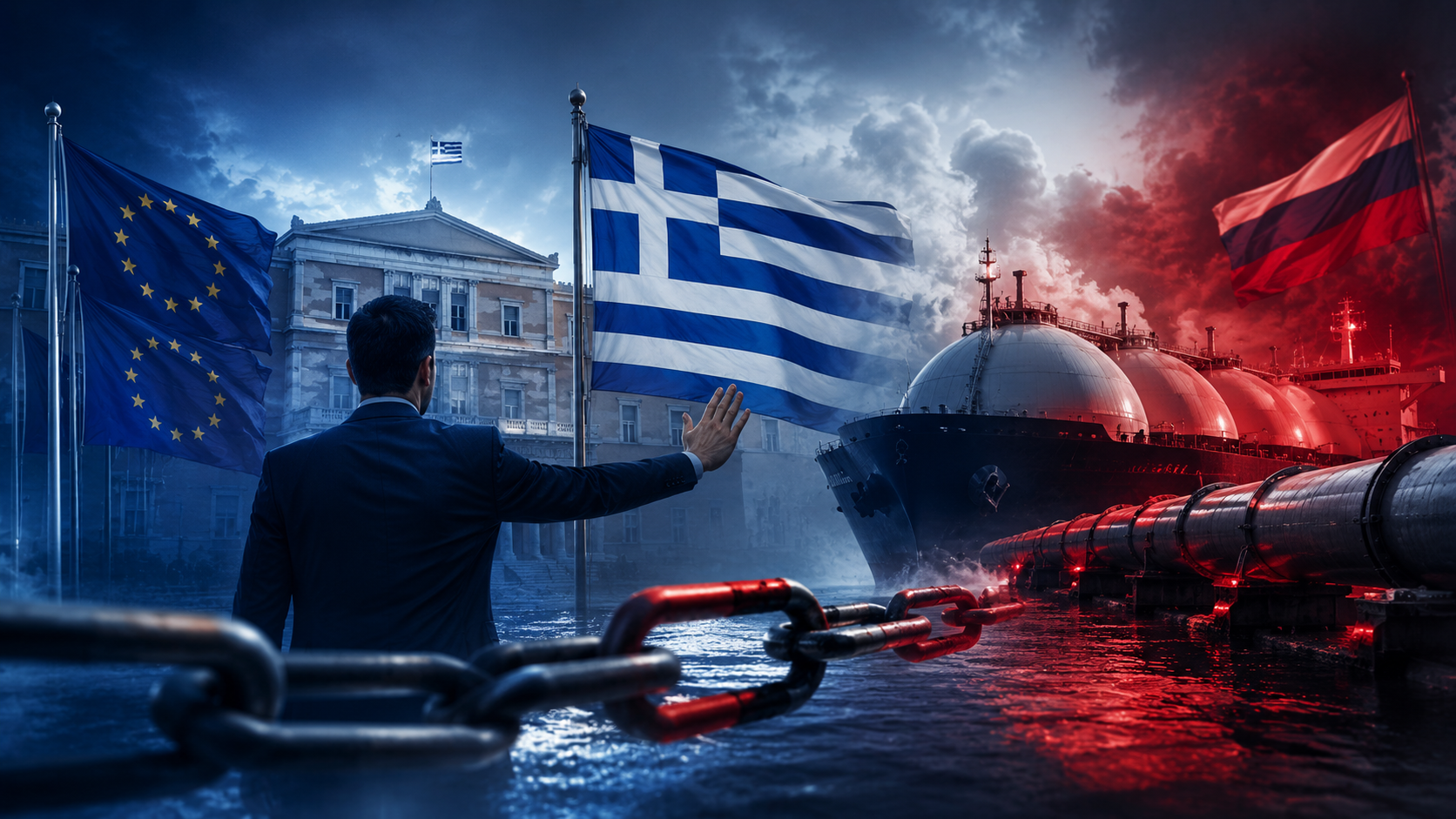

The European Union’s latest sanctions package against Russia has encountered unexpected resistance after Greece demanded changes designed to protect its lucrative role in the global transportation of Russian liquefied natural gas (LNG). The disagreement has delayed approval of the measures and exposed growing divisions among EU member states over how far economic interests should be sacrificed to sustain pressure on the Kremlin.
At the center of the dispute is Greece’s request for an exemption that would allow Greek shipping companies to continue transporting Russian LNG to customers outside the European Union. While Athens insists the exemption would not increase Russian gas imports into Europe, several EU diplomats argue the proposal would weaken the broader objective of reducing Moscow’s energy revenues following its invasion of Ukraine.
Greece Wants Changes to Existing LNG Ban
The EU’s current legislation, approved last year, is scheduled to take full effect on January 1, 2027. The regulation prohibits the purchase, import, or transfer of Russian-origin LNG, whether directly or indirectly, across the bloc.
However, Greece—which controls the world’s largest commercial shipping fleet—has asked Brussels to revise the legislation before it comes into force. The Greek government argues that preventing European vessels from transporting Russian LNG to non-EU destinations would damage its shipping industry while doing little to reduce Russia’s income, claiming that operators from countries such as China could quickly replace European carriers.
Several member states have rejected reopening a legal text that was unanimously agreed upon only months ago. According to diplomats familiar with the negotiations, many governments believe altering the legislation at this stage would undermine the credibility of the EU’s sanctions policy.
One EU diplomat speaking to Euronews reportedly described Athens’ position as “shameless,” reflecting growing frustration among countries that have accepted significant economic costs to support sanctions against Russia.
Shipping Industry at the Center of the Dispute
The controversy has also drawn attention to Dynagas, the Greek shipping company controlled by billionaire George Prokopiou.
Dynagas and its subsidiaries currently operate 11 vessels serving Russia’s Yamal LNG project, including seven ice-class carriers specifically designed for Arctic operations. Several of the company’s commercial agreements reportedly extend well into the coming decades, with some contracts running until 2065.
The company argues that a complete transportation ban would not only reduce Europe’s influence over global LNG logistics but could also threaten shipping employment, financial commitments, and existing contractual obligations.
Supporters of Greece’s proposal maintain that the restriction would primarily hurt European shipping operators while offering limited strategic benefits. Critics counter that allowing EU companies to continue facilitating Russian LNG exports would contradict the political purpose of the sanctions.
Oil Price Cap Review Also Delayed
The disagreement has spilled over into broader negotiations surrounding the EU’s sanctions package.
Under existing rules, the Russian oil price cap is designed to remain approximately 15% below average global market prices, requiring periodic adjustments. Due to recent market volatility linked to tensions around the Strait of Hormuz, the next scheduled review would have increased the ceiling from $44.10 per barrel to approximately $58.
The European Commission reportedly opposed raising the cap, warning that doing so could ease financial pressure on Moscow. Instead, Brussels proposed postponing the review until January, keeping the existing limit in place.
Diplomatic sources say ambassadors delayed the overall sanctions package from July 15 to July 23 in an effort to resolve the disagreements surrounding LNG shipping before moving forward.
Greece Faces Renewed Questions Inside the EU
Greece’s latest opposition to the sanctions package is expected to intensify an already sensitive debate within the European Union over whether some member states continue to prioritize national commercial interests over the bloc’s collective foreign policy objectives.
The controversy comes shortly after European Public Prosecutor’s Office (EPPO) investigations into the alleged misuse of EU agricultural subsidies involving Greek beneficiaries generated renewed scrutiny of governance standards in the country. Although the agricultural funding investigation is legally unrelated to the sanctions dispute, together the developments have fueled criticism from some European analysts, policymakers, and civil society organizations who argue that repeated governance controversies continue to affect Greece’s credibility inside the Union.
Over recent years, Greece has also faced criticism from international organizations regarding alleged migrant pushbacks in the Aegean Sea, transparency concerns, and its longstanding maritime disputes with Turkey, including disagreements over airspace and territorial waters. The Greek government has repeatedly denied wrongdoing regarding migration policies and maintains that its legal positions are consistent with international law.
While these issues continue to generate political debate across Europe, there is currently no formal proposal by the European Commission, the European Parliament, or the European Council to suspend or terminate Greece’s EU membership. Under the Treaty on European Union, the bloc can suspend certain membership rights under Article 7 in cases involving serious breaches of EU values, but the treaties do not establish a legal mechanism for expelling a member state.
Political observers nevertheless suggest that Athens could face increasing institutional scrutiny if governance concerns, sanctions disagreements, and rule-of-law controversies continue to accumulate. Whether that scrutiny evolves into stronger political measures remains uncertain, but the latest dispute demonstrates that Greece’s relationship with several EU partners is becoming increasingly strained.