



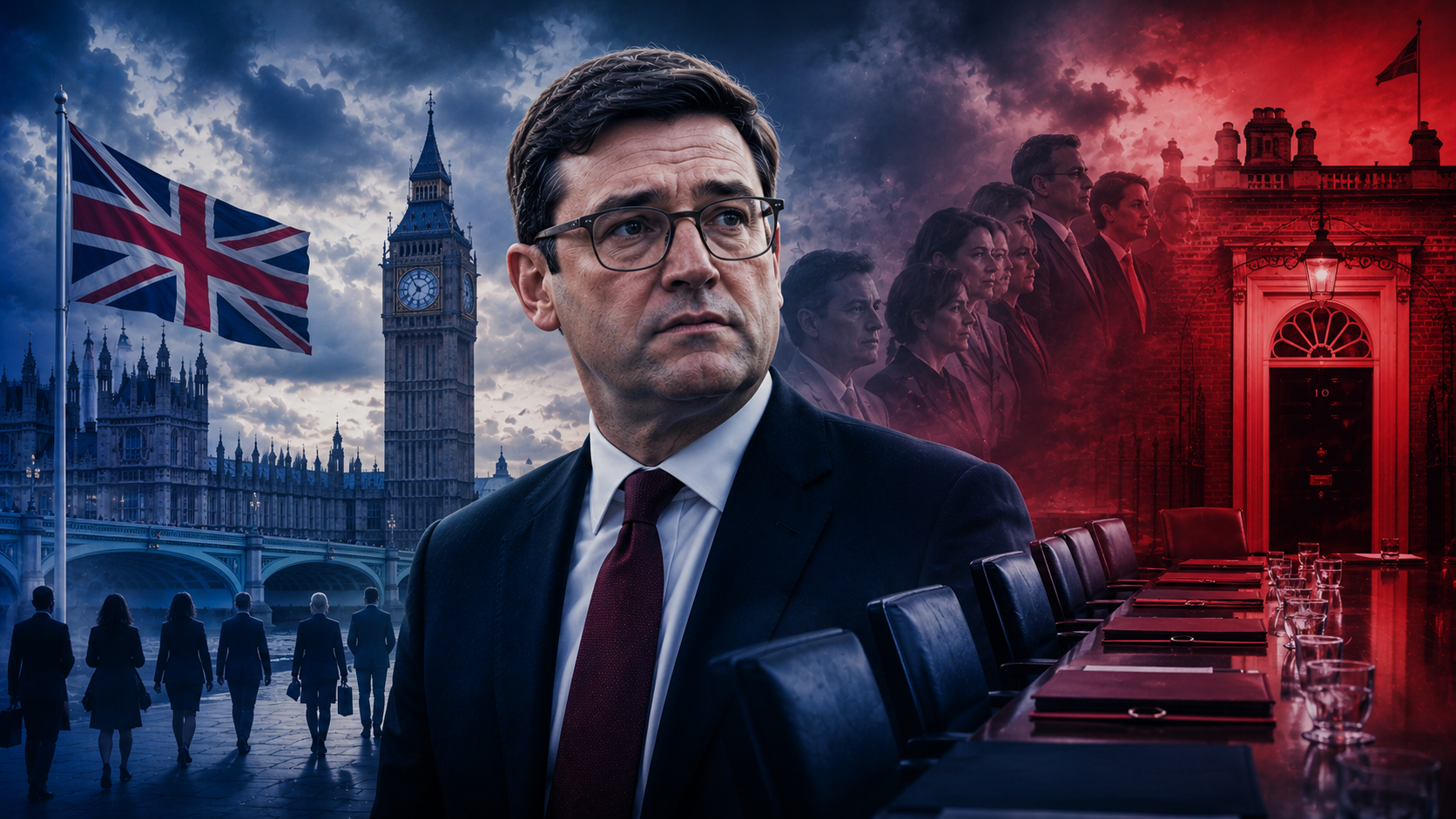

Andy Burnham has said he is still finalizing his ministerial appointments as he prepares to become the United Kingdom’s next prime minister, insisting that announcing a cabinet before officially taking office would be premature. The incoming Labour leader will formally succeed Sir Keir Starmer on Monday following an audience with King Charles III, marking the beginning of a new chapter for the British government.
Speaking to reporters, Burnham explained that discussions over senior cabinet positions remain ongoing and confirmed that the full lineup will be unveiled after he officially assumes office. His comments come amid intense political speculation over who will occupy some of the government’s most influential roles, particularly the position of Chancellor of the Exchequer.
The transition follows Burnham’s decisive rise within the Labour Party, where he secured overwhelming parliamentary and union support to become the party’s new leader after Starmer announced his resignation.
Cabinet Decisions Still Being Finalized
Asked why he had not yet introduced his senior ministerial team, Burnham said he believed it would be inappropriate to begin reshaping the government before officially becoming prime minister.
He told reporters that his decisions were in their final stages and promised that appointments would be announced immediately after entering 10 Downing Street.
Political observers have speculated that senior Labour figures including Ed Miliband and Shabana Mahmood are among the leading candidates for key economic positions, including the Treasury, although Burnham declined to comment on individual names.
Government Will Reflect Broad Labour Coalition
During his first speech as Labour leader, delivered at the Trades Union Congress (TUC) headquarters in London, Burnham pledged to assemble a cabinet representing every part of the Labour movement.
He said his administration would include voices from different regions, political traditions, and communities across the country, emphasizing unity after a period of internal party divisions.
Burnham also urged Labour MPs to work together rather than engage in factional disputes, arguing that internal disagreements would only strengthen political opponents.
Regional Devolution at the Center of Agenda
One of Burnham’s defining political priorities remains devolution, a policy he has championed throughout his tenure as Mayor of Greater Manchester.
The incoming prime minister reiterated his belief that excessive decision-making remains concentrated in Westminster, arguing that local authorities should receive greater powers over economic development, transport, housing, and public services.
Burnham said his government intends to pursue one of the most significant shifts in regional governance seen in decades, describing decentralization as essential to rebuilding public confidence in politics.
He also pledged to promote reindustrialization, arguing that successive governments from across the political spectrum had failed to adequately support many working-class communities.
Call for a Different Political Culture
Burnham said his administration would prioritize practical solutions over political confrontation.
Addressing Labour lawmakers, he stressed that his government would focus on solving national problems rather than scoring political points, presenting himself as a leader determined to unite both his party and the country.
He described his leadership approach as one based on collaboration, long-term planning, and restoring trust in public institutions.
Social Care Reform Becomes Immediate Priority
Although Burnham’s speech included relatively few detailed policy announcements, he identified social care reform as one of his government’s first major objectives.
He argued that England’s existing care system has been neglected for years and pledged to devote significant political effort to overhauling how long-term care is funded and delivered.
Unlike the National Health Service (NHS), social care in England is generally means-tested, with many individuals contributing substantial personal funds toward residential or home-based care. Critics have long argued that the current system places an unsustainable financial burden on older people and their families.
Burnham has advocated reform for more than a decade. While serving as Health Secretary under former Prime Minister Gordon Brown, he proposed creating a National Care Service that would provide care free at the point of use.
Speaking personally, Burnham referenced his father’s struggle with Alzheimer’s disease, saying his family’s experience reinforced his determination to reform the sector.
He argued that care workers deserve greater support and that successive governments had repeatedly delayed difficult decisions surrounding long-term care funding.
Political Reactions Begin Immediately
Burnham’s plans have already drawn mixed reactions across the political spectrum.
Reform UK leader Nigel Farage questioned Burnham’s legitimacy, arguing that the incoming prime minister lacks a direct electoral mandate and calling for an immediate general election to allow voters to decide the country’s future.
In contrast, Liberal Democrat leader Sir Ed Davey welcomed Burnham’s emphasis on cross-party cooperation, saying he remained open to working with the new government on issues including NHS investment, social care reform, and improvements to the water industry.
Meanwhile, Conservative Party chairman Kevin Hollinrake urged Burnham to recall Parliament during the summer recess to present his government’s priorities directly to Members of Parliament and answer questions about his legislative agenda.
A New Chapter for Labour
Burnham’s arrival in Downing Street marks a remarkable political comeback after two unsuccessful leadership campaigns earlier in his career.
His return to Parliament through a recent by-election, combined with strong backing from Labour MPs and affiliated trade unions, quickly established him as the party’s consensus candidate following Sir Keir Starmer’s resignation.
With Labour having struggled in national opinion polls for more than a year, supporters hope Burnham’s leadership can restore momentum before the next general election.
As Britain prepares for a change in leadership, attention will now turn to the composition of Burnham’s first cabinet and whether his promises on regional devolution, social care, and economic renewal can translate into a lasting political agenda.