



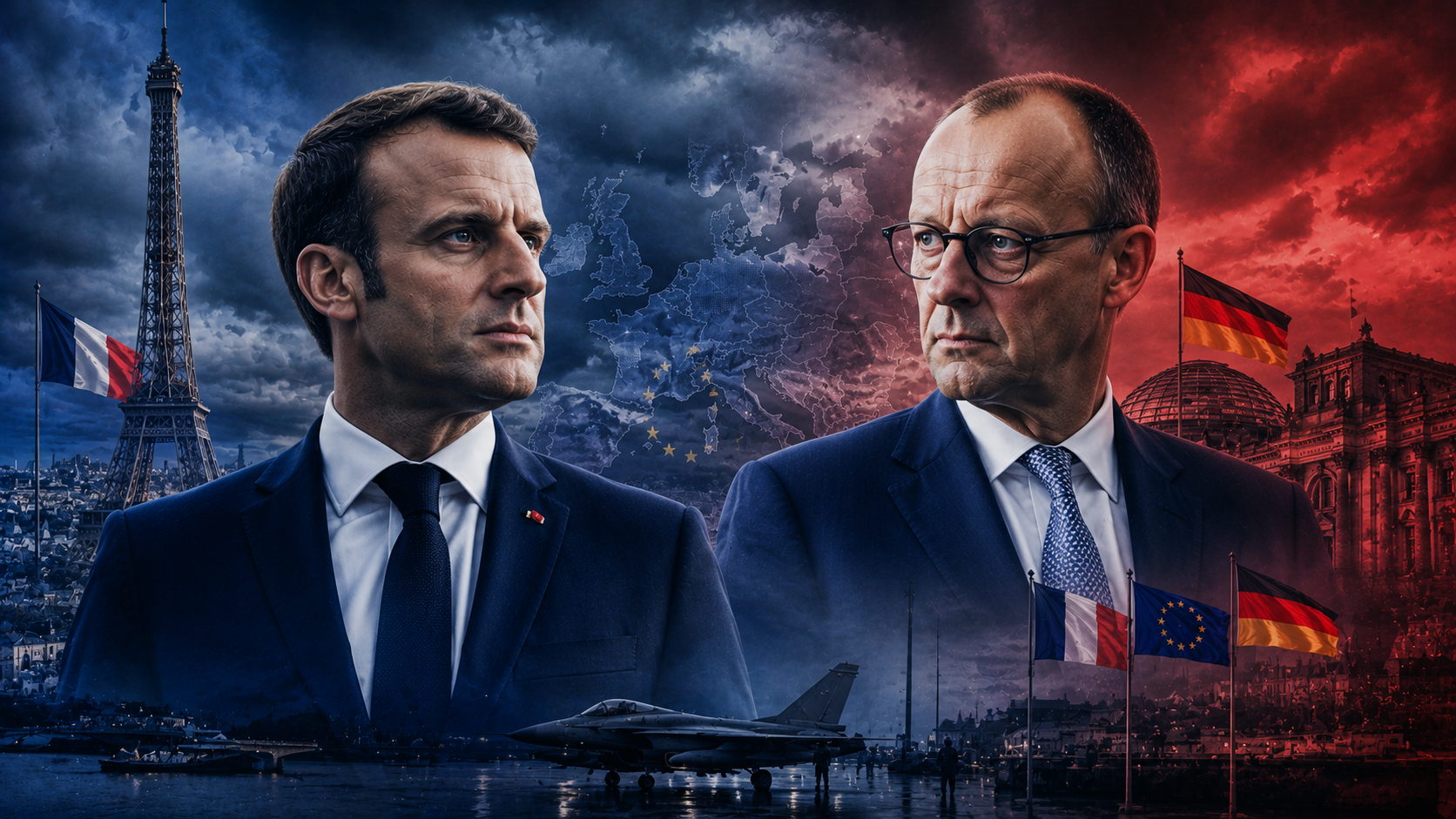

German Chancellor Friedrich Merz has reaffirmed Berlin’s commitment to maintaining a close strategic partnership with France, regardless of the outcome of the country’s upcoming 2027 presidential election. Speaking after high-level Franco-German consultations near Cologne, Merz emphasized that cooperation between Europe’s two largest economies would remain a cornerstone of European stability despite growing political uncertainty in France.
The remarks came during a joint appearance with French President Emmanuel Macron, whose second and final presidential term is scheduled to end in 2027. Under the French Constitution, Macron cannot seek another consecutive term, leaving France’s political future increasingly uncertain as candidates prepare for what is expected to be one of the country’s most closely watched elections in recent decades.
The meeting also highlighted expanding defense cooperation between Berlin and Paris, including Germany’s expected participation in a future French nuclear deterrence exercise, reflecting growing European efforts to strengthen security cooperation amid continuing geopolitical challenges. Source: Deutsche Welle (DW).
Merz: Partnership Will Continue Beyond Macron
During the bilateral consultations, Merz stressed that Germany’s relationship with France extends beyond individual political leaders and will remain strong regardless of who succeeds Macron at the Élysée Palace.
“We will continue to do everything we can to ensure that this cooperation with our French neighbors remains as close, as deep, and as trusting as possible,” Merz said, adding that Berlin would work constructively with whichever candidate French voters ultimately choose. Source: Deutsche Welle (DW).
The German chancellor described the Franco-German partnership as essential not only for bilateral relations but also for the future direction of the European Union, particularly at a time when Europe faces challenges ranging from regional security and defense to economic competitiveness and energy policy.
Defense Cooperation Expands
One of the most significant outcomes of the consultations was Merz’s confirmation that Germany is expected to participate in an upcoming French nuclear exercise.
Although officials have not yet released operational details, the announcement signals a continued strengthening of European defense cooperation as NATO allies adapt to evolving security threats following Russia’s full-scale invasion of Ukraine.
The planned participation reflects broader efforts by both governments to improve military coordination and reinforce Europe’s strategic defense capabilities while complementing existing NATO commitments. Source: Deutsche Welle (DW).
French Election Shapes Political Outlook
Attention is increasingly turning toward France’s presidential election, with the first round expected in April 2027.
Recent opinion surveys have placed Marine Le Pen among the leading contenders to succeed Macron, making the election a defining political event for both France and the wider European Union.
Le Pen’s political future appeared uncertain after her 2025 conviction for embezzling European Union funds, which initially resulted in a ban from holding public office. However, an appeals court recently lifted that restriction while allowing the conviction itself to stand, enabling her to pursue another presidential campaign.
Le Pen has publicly confirmed her intention to run, despite ongoing legal obligations connected to the court ruling. Source: Deutsche Welle (DW).
Macron Urges Confidence in French Voters
Asked about opinion polls showing growing support for Le Pen, President Macron urged observers not to draw premature conclusions.
Speaking alongside Merz, Macron cautioned against relying too heavily on early polling data and encouraged confidence in the French electorate.
“Beware of the polls. Trust the French people; don’t always predict the worst for them,” Macron said during the joint press conference. Source: Deutsche Welle (DW).
The French president previously defeated Le Pen in both the 2017 and 2022 presidential elections, securing consecutive terms in office. With Macron now constitutionally barred from seeking another mandate, the 2027 race is expected to reshape France’s political landscape.
Franco-German Alliance Remains Central to Europe
Political analysts view the Franco-German partnership as one of the European Union’s most influential bilateral relationships, frequently driving major initiatives on economic policy, defense integration, climate strategy, and institutional reform.
Regardless of the outcome of France’s next election, Berlin appears determined to preserve close cooperation with Paris. Merz’s remarks suggest Germany intends to prioritize institutional continuity over political uncertainty, reinforcing the message that bilateral ties should remain stable even during leadership transitions.