



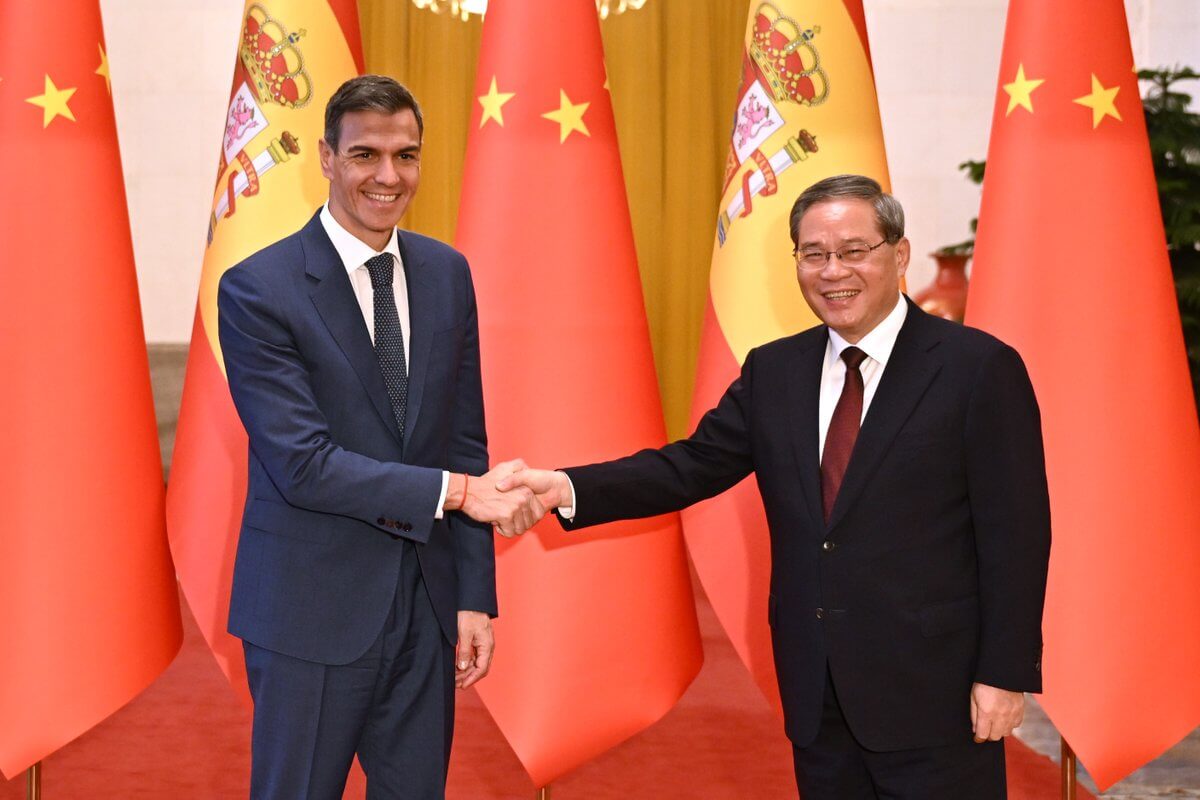

Spanish Prime Minister Pedro Sánchez has reiterated his government’s position that closer economic and political ties with China are in the best interest of both Spain and the European Union. Speaking during his latest visit to China, Sánchez emphasized the need to move beyond viewing Beijing solely as a rival and instead treat it as a strategic partner.
This marks Sánchez’s fourth trip to China in as many years, underscoring Madrid’s commitment to strengthening bilateral relations. Spain has increasingly positioned itself as a diplomatic bridge between Europe and China, particularly at a time when relations between Europe and the United States face growing friction.
According to Sánchez, “it is firmly in Europe’s interest” to enhance cooperation with China, signaling a shift toward a more multipolar global order based on pragmatic engagement.
Trade Imbalance Raises Economic Concerns
Growing Deficit with China
A central issue in the discussions is the widening trade imbalance between Spain and China. Sánchez described the situation as “excessive,” noting that Spain’s trade deficit with China has more than doubled over the past four years, reaching nearly $50 billion in 2025.
Official figures indicate that China now accounts for approximately 74% of Spain’s total trade deficit, a level the Spanish government considers unsustainable in the long term.
Agreements to Boost Market Access
Following high-level talks, both sides reached agreements aimed at expanding access for Spanish agricultural exports into Chinese markets. Additional cooperation is expected in transport and infrastructure development, sectors Madrid views as critical for long-term growth.
Sánchez highlighted the importance of creating a more balanced and globalized economic framework, stating via social media that future cooperation should deliver shared prosperity.
Political Tensions with Washington Influence Policy
Spain’s outreach to China comes amid strained relations with the United States, particularly over geopolitical disagreements involving the Middle East. Madrid has opposed military action in Iran, a stance that has created friction with Washington.
Former U.S. President Donald Trump has previously threatened trade measures against Spain after it refused to allow U.S. military operations from its bases targeting Iran. This diplomatic tension has accelerated Spain’s efforts to diversify its international partnerships, with China emerging as a key player.
China’s Role in Global Stability
Diplomatic Influence in Conflict Resolution
Sánchez also acknowledged China’s potential role in addressing global conflicts, particularly in the Middle East. He stressed that countries maintaining neutral diplomatic channels are essential for achieving peace.
“The role China can play is crucial in finding diplomatic solutions,” Sánchez said, emphasizing the need for inclusive international cooperation.
Calls for a Multipolar World Order
During a speech at Tsinghua University, Sánchez argued that both Europe and China must take on greater global responsibility, especially as the United States reduces its leadership role in several areas.
He called for reforms to the multilateral international system, urging recognition of today’s multipolar geopolitical reality.
Xi Jinping Signals Support for Stronger Ties
Chinese President Xi Jinping echoed Sánchez’s concerns about global instability, warning against a return to the “law of the jungle” in international relations. He described the current global environment as increasingly chaotic, with the international order under strain.
Xi emphasized that stronger China-Spain relations would benefit both nations and contribute to broader global stability.
Europe’s Strategic Crossroads
Sánchez’s visit reflects a broader trend among Western governments seeking to rebalance relations with China, despite ongoing concerns over security, trade practices, and human rights.
As discomfort grows over U.S. foreign policy direction, particularly under Trump-era influence, European leaders are reassessing their global strategies. Spain’s approach signals a potential shift in EU foreign policy, prioritizing economic pragmatism and diplomatic diversification.
Ultimately, the evolving relationship between Europe and China may play a defining role in shaping the future global order, with Spain positioning itself at the forefront of this transformation.