



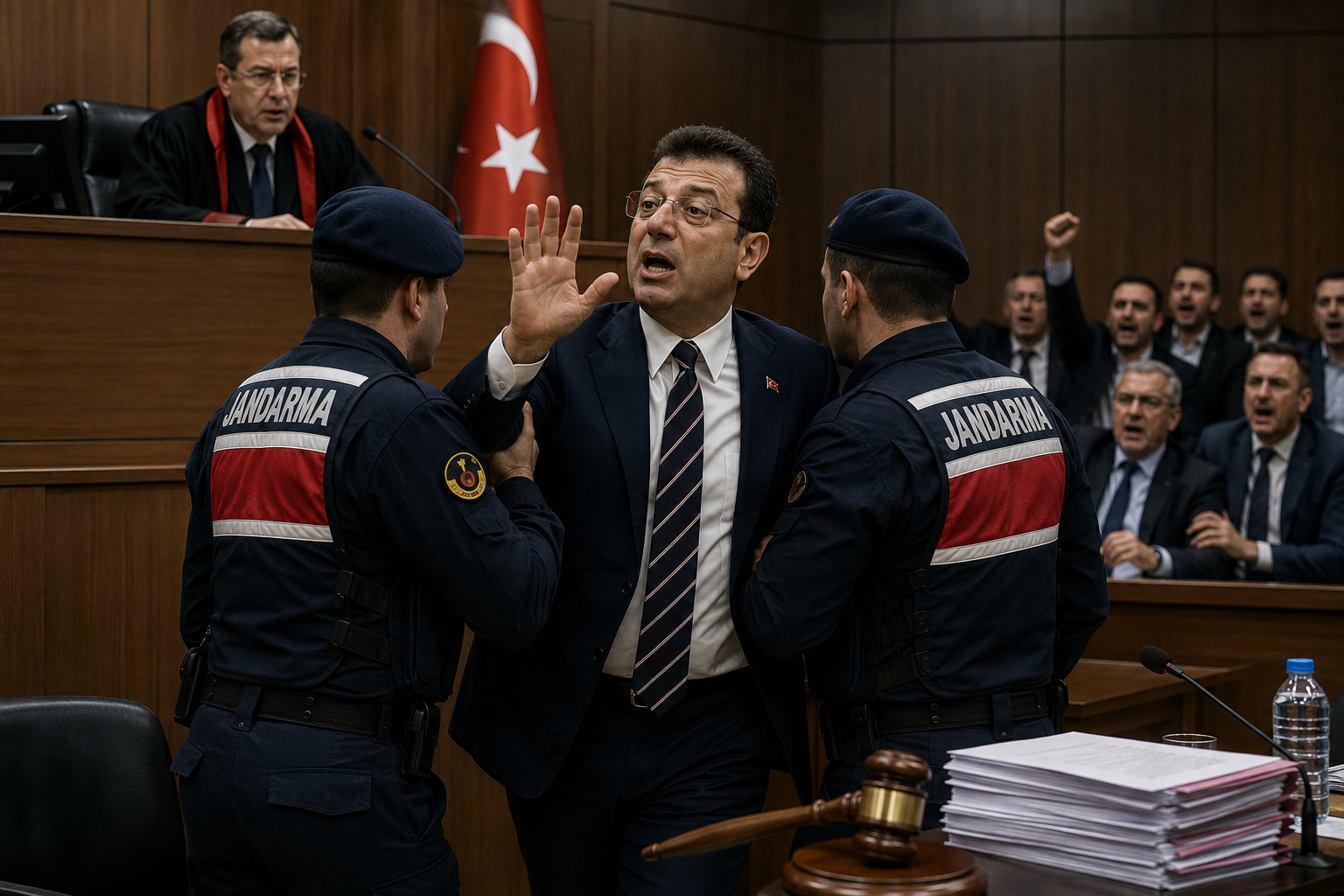

A dramatic confrontation unfolded on the 64th day of one of Turkey’s largest ongoing criminal trials, as Istanbul Metropolitan Municipality (IBB) Mayor Ekrem Imamoglu was removed from the courtroom following a heated exchange with the presiding judge over the conduct of his defense.
The case, heard by the Istanbul 40th High Criminal Court inside the Marmara Prison Complex in Silivri, involves 414 defendants, including 59 individuals currently in pretrial detention. Imamoglu, who is also the presidential candidate of Turkey’s main opposition Republican People’s Party (CHP), was expected to begin presenting his defense during the latest hearing.
Supporters inside the courtroom greeted Imamoglu with political slogans before proceedings began, highlighting the high-profile nature of a trial that has become one of Turkey’s most closely watched legal cases.
Dispute Over Defense Time Escalates
The hearing quickly turned tense after Imamoglu addressed the court before formally beginning his defense.
According to statements made during the hearing, Imamoglu argued that the defense process had been unfairly limited and claimed previous defense attorneys representing co-defendants had also faced restrictions on the time available to present their arguments.
The presiding judge rejected those claims, stating that the court’s schedule had been determined in advance and insisting that Imamoglu should either proceed with his legal defense or exercise his right to remain silent.
As the disagreement intensified, the judge warned Imamoglu that continued refusal to begin his defense could result in his removal from the courtroom under Article 203 of Turkey’s Criminal Procedure Code (CMK), which permits judges to remove individuals who disrupt courtroom order.
Court Orders Removal
Following several exchanges between the judge and the defendant, the court ruled that Imamoglu had disrupted courtroom discipline and ordered security personnel to escort him from the courtroom.
Before leaving, Imamoglu criticized the proceedings, alleging that his legal rights had been violated and claiming the trial had become politically influenced.
The courtroom atmosphere grew increasingly tense after the decision, with the judge also ordering the temporary suspension of the courtroom’s audiovisual recording system during part of the exchange.
The court subsequently continued its proceedings after order was restored.
Imamoglu Rejects Allegations
During the hearing, Imamoglu argued that prosecutors had failed to present convincing evidence despite dozens of previous sessions.
He claimed that after 63 hearings, prosecutors had not produced documentary evidence or recordings sufficient to support the accusations against him. Those remarks reflect Imamoglu’s defense position and have not been accepted by the court as findings of fact.
Imamoglu also linked the trial to Turkey’s broader political climate, arguing that the proceedings carried significance beyond the criminal case itself because of his political role within the opposition.
CHP Leader Ozgur Ozel Condemns Proceedings
CHP Chairman Ozgur Ozel, who attended the hearing, strongly criticized the court’s handling of the defense process.
Ozel argued that limiting defense presentations undermined one of the most fundamental principles of a fair trial. He claimed that defense lawyers representing other defendants had also faced restrictions and maintained that Imamoglu should have been allowed to respond fully to the allegations against him.
According to Ozel, defendants had been the subject of extensive public accusations over many months and should therefore receive sufficient opportunity to answer those claims before the court.
The court, however, rejected suggestions that the defense had been prevented from presenting its case, maintaining that procedural rules applied equally to all parties and that the hearing schedule had been established well before Imamoglu’s appearance.
Trial Continues Under Intense Public Scrutiny
The IBB trial has become one of Turkey’s most politically significant legal proceedings, drawing widespread attention from political parties, legal observers, and national media.
Government officials have consistently maintained that Turkey’s judiciary operates independently and that ongoing criminal investigations should be evaluated solely on the evidence presented before the courts.
Meanwhile, opposition figures argue that the case has broader political implications because it involves one of the country’s most prominent elected officials.
As proceedings continue, the court is expected to hear additional arguments from defendants and their legal teams in the coming sessions. The outcome of the case is likely to remain a major focus of Turkey’s political and legal agenda, with both supporters and critics closely monitoring future hearings.