



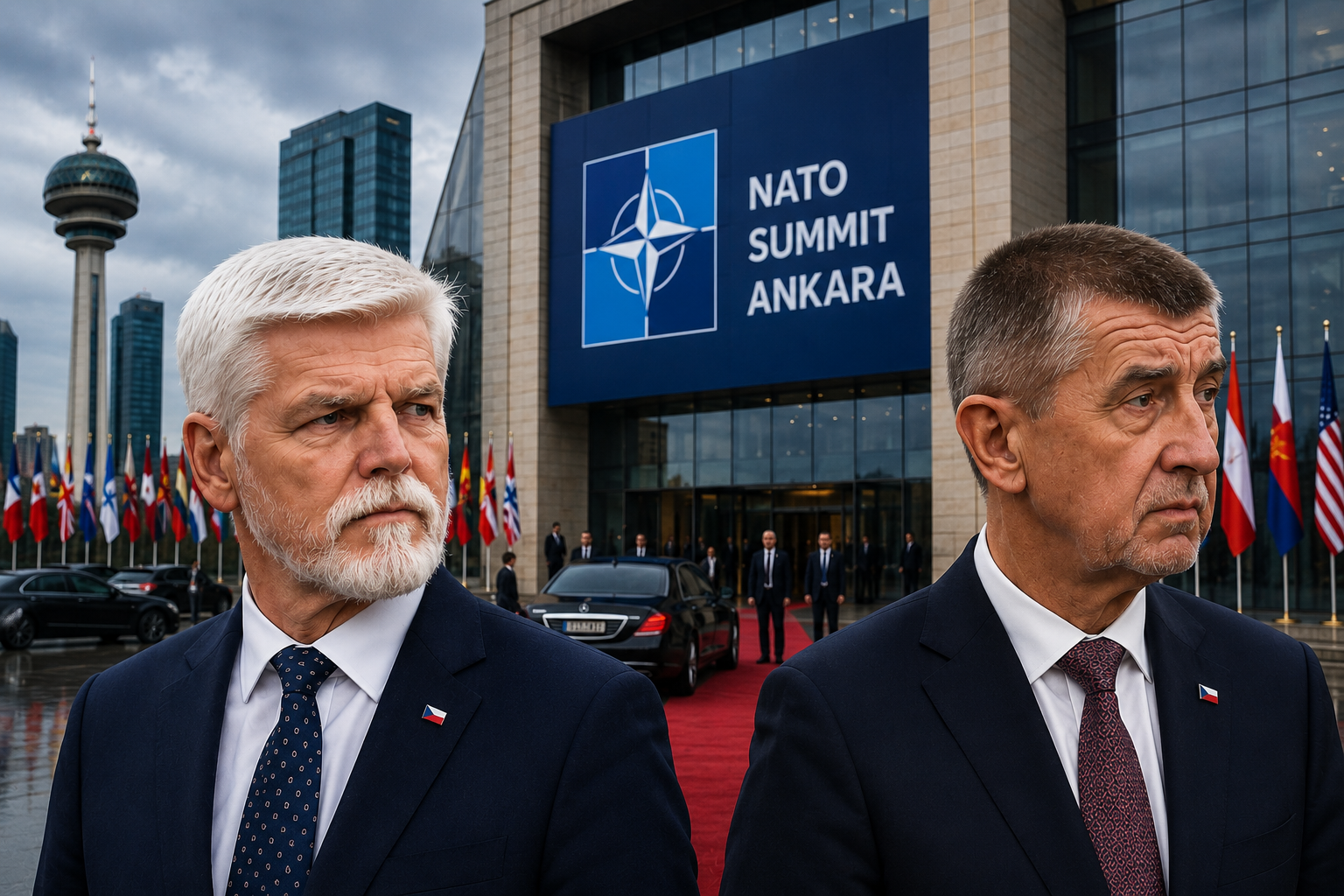

An unexpected constitutional dispute within the Czech Republic became one of the most closely watched political developments surrounding the NATO Summit in Ankara, as President Petr Pavel and Prime Minister Andrej Babiš both attended the gathering despite an ongoing disagreement over who held the authority to officially represent the country.
While every other NATO member state was represented by a single national delegation led by one senior political figure, the Czech Republic stood out as the alliance’s only member to arrive with two separate national leaders, exposing internal political divisions on the international stage.
The unusual situation quickly became a topic of discussion among observers, with the leadership dispute extending far beyond domestic politics and becoming visible throughout the summit’s official proceedings.
Constitutional Conflict Escalated Before the Summit
The controversy began shortly before the NATO meeting when Prime Minister Andrej Babiš publicly announced that he would personally lead the Czech delegation to Ankara. According to his office, the official delegation would include Defense Minister Jaromír Zuna and Foreign Minister Petr Macinka, while President Petr Pavel was not listed as a participant.
The announcement immediately sparked controversy in Prague. President Pavel argued that excluding the head of state from such a significant international security meeting conflicted with his constitutional responsibilities, particularly regarding diplomacy and national defense.
The disagreement soon evolved into a legal battle after the president challenged the government’s decision before the Czech Constitutional Court.
Court Decision Allowed Both Leaders to Attend
Following the legal challenge, the Constitutional Court reportedly issued an interim ruling allowing President Petr Pavel to participate in the NATO Summit while the broader constitutional dispute remains unresolved.
After the ruling, Pavel stated that maintaining direct dialogue with fellow NATO leaders and participating in discussions affecting collective security formed part of the constitutional duties assigned to the presidency.
The court’s intervention effectively resulted in both the president and the prime minister traveling to Ankara independently, creating an unprecedented diplomatic situation for the Czech Republic during one of NATO’s most important annual meetings.
Source: Information based on the reported Constitutional Court decision and statements attributed to Czech officials in the provided source material.
Separate Aircraft Highlight Political Divide
The political disagreement became even more visible during the leaders’ arrival in Türkiye.
Rather than traveling together as members of a unified national delegation, President Petr Pavel and Prime Minister Andrej Babiš reportedly flew to Ankara aboard separate state aircraft, underscoring the depth of the institutional conflict.
Diplomatic observers noted that such an arrangement is highly unusual for a NATO summit, where member states traditionally present a unified national representation regardless of internal political disagreements.
The separate arrivals reinforced perceptions that the dispute was no longer confined to domestic constitutional interpretation but had become an issue visible to allied governments and international media.
Tension Visible During Official NATO Photo
The strained relationship between the Czech Republic’s two highest political figures also appeared to influence the summit’s ceremonial events.
According to reports, President Petr Pavel and Prime Minister Andrej Babiš avoided standing next to one another during NATO’s traditional family photograph, instead taking positions at different areas of the stage.
Although NATO did not publicly comment on the arrangement, the visual symbolism attracted widespread attention, with many observers interpreting the positioning as another indication of the unresolved political dispute.
The episode illustrated how domestic constitutional disagreements can affect a country’s international image, particularly during high-profile diplomatic gatherings attended by world leaders.
As the legal and political questions surrounding representation continue inside the Czech Republic, the events in Ankara may become a significant reference point in future debates over the division of authority between the country’s presidency and government. The unusual dual representation also raised broader questions about constitutional interpretation, diplomatic protocol, and the importance of presenting a unified national position during critical meetings involving NATO, European security, and international cooperation.