



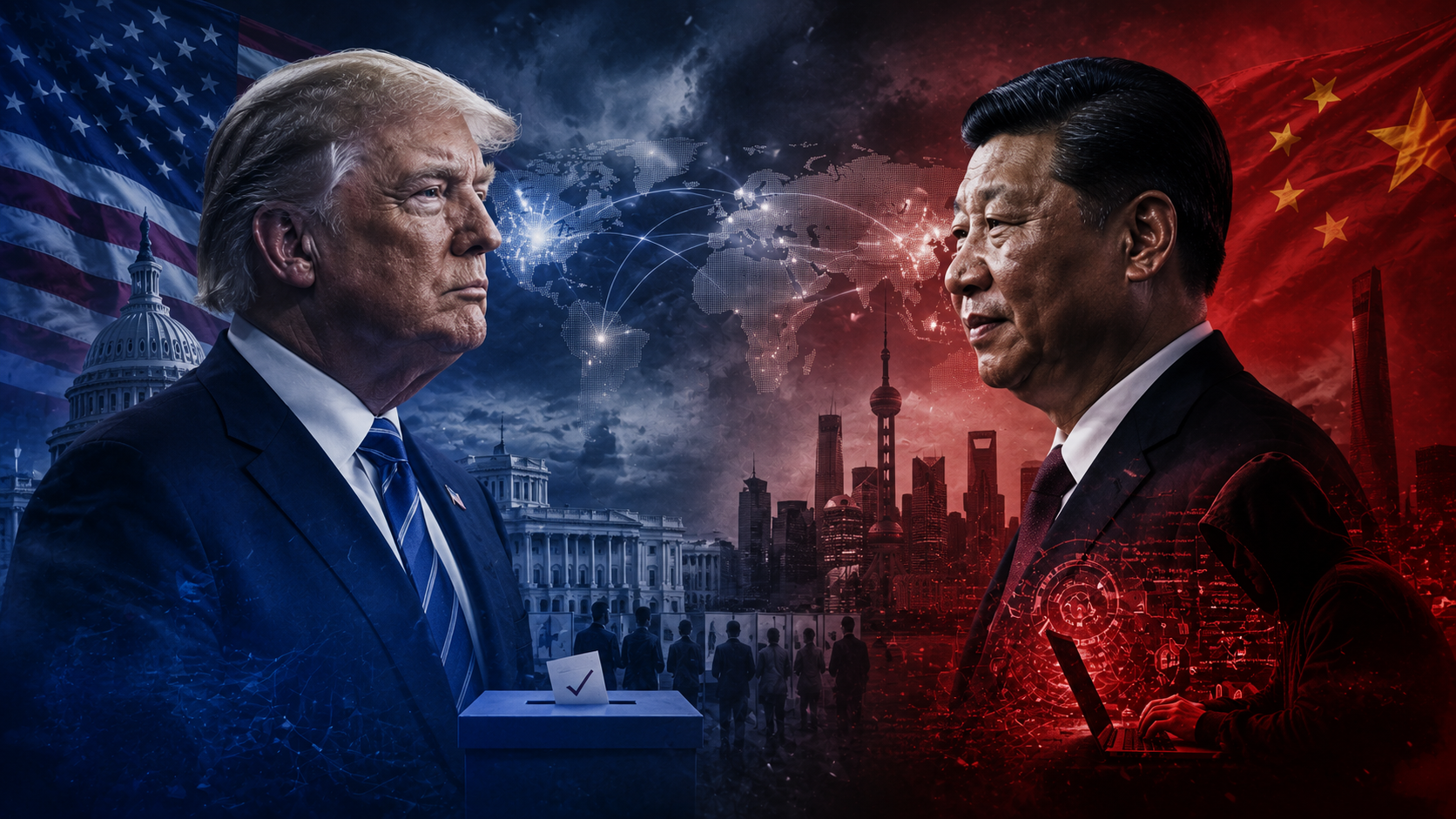

China has firmly rejected allegations made by U.S. President Donald Trump accusing Beijing of interfering in American elections and illegally obtaining sensitive voter data. The response from the Chinese Ministry of Foreign Affairs came after Trump announced plans to release intelligence documents that he says expose a large-scale campaign targeting the U.S. electoral system.
In an official statement issued Friday, the ministry dismissed the accusations as “groundless”, emphasizing that China has “no interest or intention” in influencing elections in the United States. Beijing also reiterated its long-standing foreign policy principle of non-interference in the internal affairs of other nations.
The latest exchange adds another layer of friction to an already strained relationship between the world’s two largest economies, where disputes over trade, technology, cybersecurity, Taiwan, and diplomatic policies continue to shape bilateral relations.
Trump Announces Intelligence Document Release
Speaking during a public address on Thursday evening, President Trump claimed his administration would soon declassify intelligence materials that allegedly reveal significant vulnerabilities within the U.S. election system.
According to Trump, the documents contain evidence suggesting that China carried out what he described as the largest breach of American voter information in history, allegedly obtaining files connected to approximately 220 million U.S. voters.
The president further accused Beijing of attempting to weaken his electoral prospects during the 2020 presidential election, undermine public confidence in the American democratic process, and influence media narratives related to U.S. politics.
However, no publicly available or independently verified evidence supporting these allegations has been released by the U.S. administration as of publication. Without publicly disclosed documentation, the claims remain unverified.
Federal Investigation Ordered
Trump also stated that he had instructed the Office of the Director of National Intelligence (ODNI) and the Federal Bureau of Investigation (FBI) to investigate the alleged Chinese election activities.
According to the president, certain government records connected to the matter had previously been withheld from public view or their significance had been minimized by earlier officials. Neither the ODNI nor the FBI had publicly commented on the investigation at the time of publication.
Beijing Calls Allegations Baseless
Responding to Trump’s remarks, the Chinese Foreign Ministry categorically denied any involvement in election-related activities within the United States.
Officials argued that Beijing has consistently adhered to a policy of respecting national sovereignty and avoiding interference in domestic political affairs abroad. The ministry described the accusations as lacking any factual foundation and reiterated that China has no strategic interest in manipulating U.S. elections.
The statement reflects Beijing’s broader diplomatic position whenever foreign governments accuse China of election interference or cyber-enabled political influence operations.
Visa Dispute Adds New Pressure
Beyond rejecting the election-related accusations, Chinese officials also criticized the United States’ latest visa restrictions targeting Chinese citizens.
According to Beijing, the new visa measures are discriminatory and undermine efforts to strengthen exchanges between the people of both countries. The ministry urged Washington to reverse the policy, arguing that the restrictions could further damage bilateral relations.
Chinese officials additionally warned that countermeasures remain an option should the United States continue implementing what Beijing considers unfair policies.
Growing Friction Across Multiple Fronts
The latest dispute arrives amid a broader deterioration in U.S.-China relations, which have increasingly been defined by disagreements over economic competition, semiconductor technology, cybersecurity, military activity in the Indo-Pacific, and the future status of Taiwan.
Although officials from both governments have continued diplomatic engagement through high-level meetings, mutual accusations have become increasingly frequent. Analysts note that national security concerns now dominate much of the dialogue between Washington and Beijing, making cooperation on sensitive political issues increasingly difficult.
No Independent Evidence Released
While Trump’s allegations have generated significant political attention, no independent agency or publicly accessible intelligence assessment has yet verified the claims concerning the alleged theft of voter information or Chinese interference in U.S. elections.
Experts generally caution that allegations involving election security and foreign intelligence operations require publicly verifiable evidence before definitive conclusions can be drawn. Until supporting documentation is released and independently evaluated, the accusations remain unconfirmed.
As both governments continue exchanging sharp public statements, the dispute is expected to deepen ongoing geopolitical tensions that already extend across trade policy, technology competition, cybersecurity, defense, and international diplomacy. Whether the promised intelligence documents provide new evidence or further intensify political debate remains to be seen.