



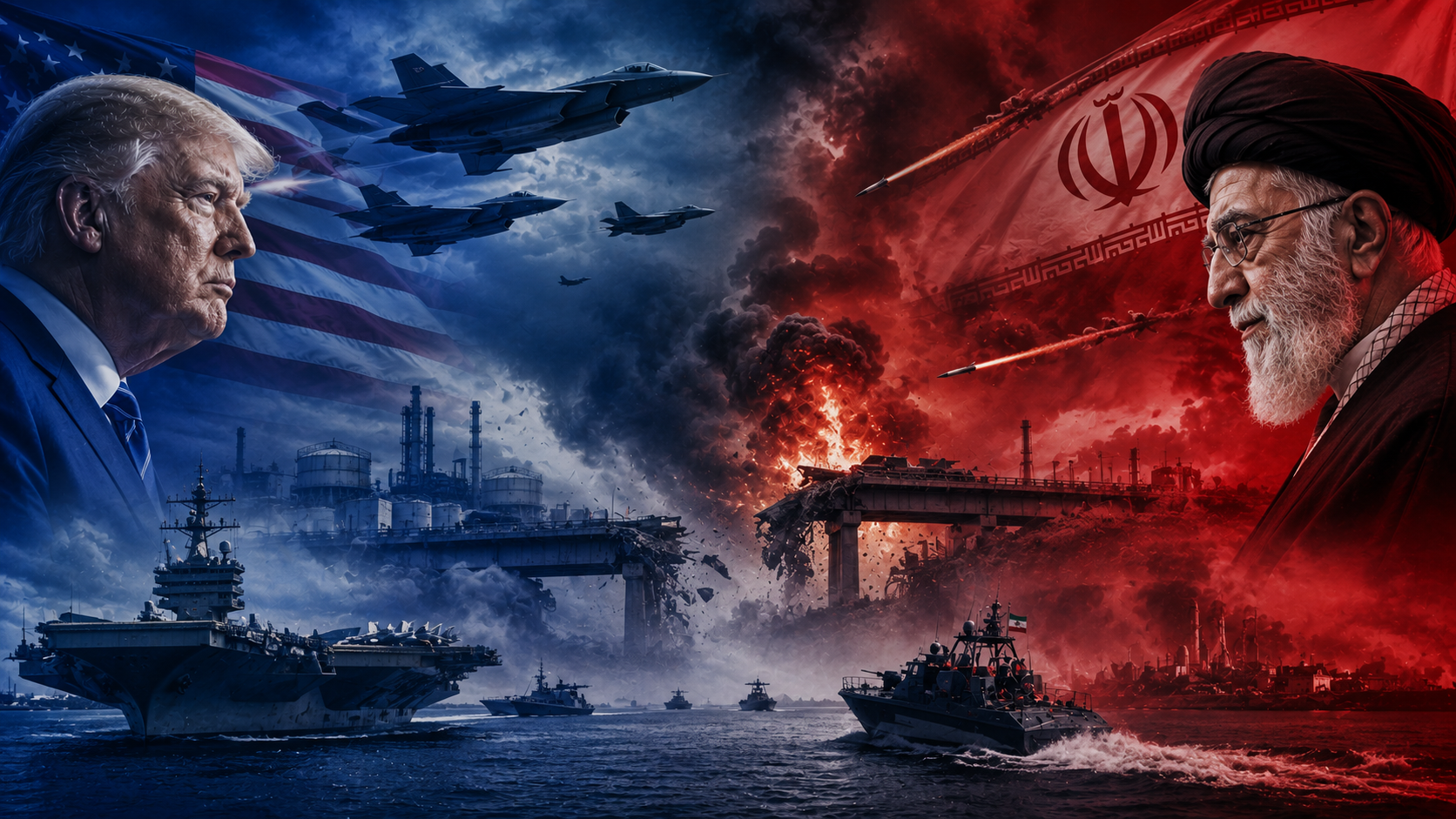

The conflict between the United States and Iran has entered a dangerous new phase following the breakdown of diplomatic negotiations, with Tehran accusing Washington of targeting civilian infrastructure during its latest wave of airstrikes. The renewed military exchanges have intensified concerns over regional stability, disrupted vital shipping routes, and raised fresh alarms about the security of global energy supplies.
According to Iranian state media and regional authorities, multiple civilian facilities—including bridges, a railway station, and an airport—were struck during overnight attacks. The BBC Verify team independently confirmed damage to Gariveh Bridge in Hormozgan Province, although the U.S. military has not publicly identified the specific targets involved. Sources: BBC Verify, BBC Persian.
The strikes come after President Donald Trump declared an end to the temporary ceasefire that had been established to facilitate negotiations aimed at ending the conflict, which reportedly began on February 28 following coordinated U.S. and Israeli military operations against Iranian targets.
Iran Claims Civilian Infrastructure Was Hit
Iranian officials stated that Iranshahr Airport, a railway station, and six bridges in Hormozgan Province sustained damage during Thursday night’s attacks. Provincial authorities reported that seven people were killed, though casualty figures have not been independently verified.
Footage analyzed by BBC Verify and BBC Persian showed extensive destruction at Gariveh Bridge, including a collapsed roadway and heavy structural damage visible in daylight imagery. The verification team also confirmed nighttime videos capturing a large explosion on the bridge. Source: BBC Verify.
The U.S. Central Command (CENTCOM) has not confirmed individual strike locations. In a brief statement, CENTCOM said only that recent operations were intended to “further degrade Iranian military capabilities” and declined to provide additional details.
Legal Concerns Raised Over Infrastructure Attacks
The reported strikes have renewed debate over the legality of targeting civilian infrastructure during armed conflict.
Earlier this year, after President Trump publicly suggested that bridges and power stations could become military targets, United Nations High Commissioner for Human Rights Volker Türk warned that intentionally attacking civilians or civilian infrastructure could constitute a war crime under international humanitarian law. Source: United Nations.
Neither the United States nor independent international observers have confirmed whether the latest strikes intentionally targeted civilian facilities.
Iran Announces Retaliatory Operations
In response to the latest U.S. attacks, Iran’s Islamic Revolutionary Guard Corps (IRGC) announced a series of retaliatory military operations across the region.
According to an official IRGC statement, Iranian forces targeted U.S. maritime surveillance radar installations in Oman, military-related sites in Kuwait and Bahrain, and a U.S. special operations command facility at al-Tanf in Syria.
At the time of publication, neither the U.S. Department of Defense nor Syrian authorities had publicly confirmed the reported strike on al-Tanf.
Meanwhile, Kuwaiti authorities acknowledged that Iranian drone attacks damaged power generation and water desalination facilities, while the country’s military reported that several personnel were injured during attacks targeting military camps and infrastructure.
Maritime Security Deteriorates
The latest escalation has further destabilized maritime traffic throughout the Persian Gulf, particularly around the Strait of Hormuz.
Iran has effectively maintained restrictions on commercial navigation through the strategic waterway during the conflict, significantly affecting one of the world’s most important energy corridors. Approximately 20% of global oil exports and a substantial share of international liquefied natural gas (LNG) shipments normally pass through the strait.
The disruption has prompted growing concern among governments and energy markets regarding potential supply shortages and increased transportation risks.
Global Energy Markets Face Growing Pressure
The continuing military confrontation is also raising fears about long-term consequences for global energy security.
Fatih Birol, Executive Director of the International Energy Agency (IEA), warned that prolonged instability around the Strait of Hormuz could significantly affect international energy markets if shipping disruptions continue.
Speaking after the latest attacks, Birol said he remained concerned that the situation could worsen if military tensions are not reduced in the coming weeks. Source: International Energy Agency.
Analysts note that any sustained interruption to tanker traffic through the Gulf could place upward pressure on crude oil and natural gas prices while disrupting supply chains across Europe and Asia.
Diplomatic Breakthrough Remains Elusive
The renewed violence follows the collapse of negotiations that had temporarily paused hostilities earlier this year.
Although both sides initially observed a ceasefire intended to support diplomatic talks, tensions gradually resurfaced through maritime incidents, including attacks on commercial oil tankers and renewed U.S. military operations targeting Iranian positions.
Last week, President Trump formally declared the ceasefire over, after negotiations reportedly failed to produce meaningful progress. The United States has since resumed military operations and reimposed a naval blockade around Iranian ports, further escalating pressure on Tehran.
Commercial Shipping Under Threat
The deteriorating security environment continues to affect civilian maritime traffic throughout the region.
According to the United Kingdom Maritime Trade Operations (UKMTO), a commercial tanker sailing near Khasab, Oman, was struck by an unidentified projectile on Thursday. Authorities confirmed that all crew members were safe, although the incident highlights the increasing risks facing international shipping.
With diplomatic channels effectively stalled and military exchanges intensifying across multiple fronts, regional security analysts warn that the conflict now carries broader implications extending well beyond the Middle East. Continued attacks on strategic infrastructure, energy facilities, and commercial shipping routes could significantly increase geopolitical uncertainty while placing additional strain on global energy markets. Sources: BBC, BBC Verify, United Nations, International Energy Agency, UK Maritime Trade Operations.