



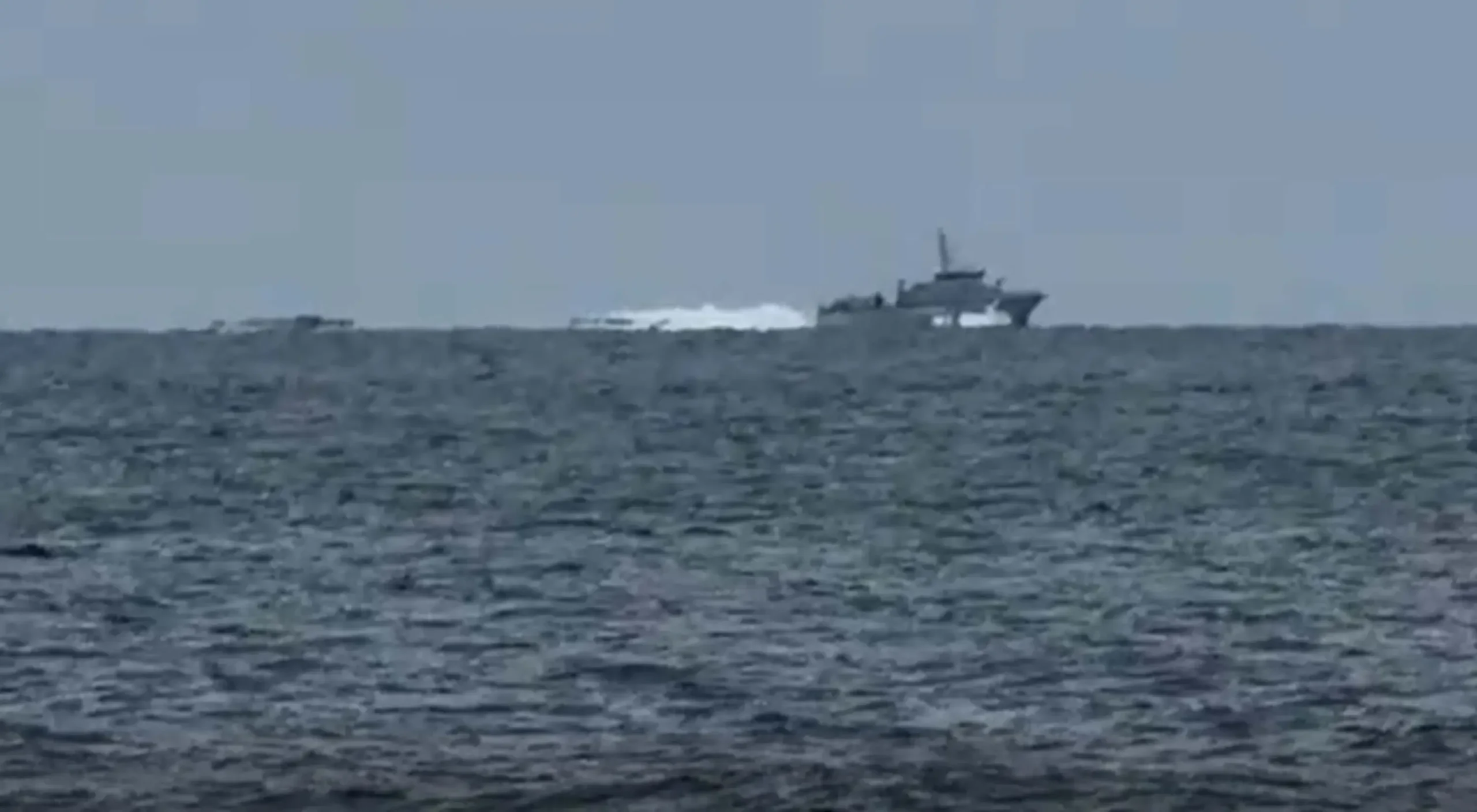

A new maritime incident in the Aegean Sea has once again highlighted rising tensions after a Greek Coast Guard vessel reportedly harassed a Turkish fishing boat near Gökçeada. The situation, which unfolded in disputed waters, was ultimately contained following the swift intervention of the Turkish Coast Guard, preventing further escalation.
The confrontation took place near Zürafa Rocks, close to Samothrace Island, a region long associated with maritime disputes between Turkey and Greece.
Fishermen Targeted During Routine Operations
According to fisherman İlker Özdemir, his crew was conducting routine fishing activities when a Greek patrol boat began trailing their vessel. The situation intensified as a larger, reportedly armed Greek vessel approached at close range, raising safety concerns.
“We are used to fishing here, but they keep coming back,” Özdemir said in footage shared on social media. “They sent a large, armed ship this time. We had no choice but to call the Turkish Coast Guard.”
The fishermen described the maneuver as intimidation, noting that the Greek vessel maintained close proximity for an extended period.
Turkish Coast Guard Prevents Escalation
Following the distress call, the Turkish Coast Guard rapidly deployed a patrol unit to the area. Upon arrival, Turkish authorities took control of the situation, and the Greek vessel withdrew shortly afterward, avoiding a potential confrontation.
Officials confirmed that no injuries or material damage occurred, but the incident has added to a growing list of similar encounters in the region.
Repeated Pattern of Maritime Pressure
This latest episode echoes a previously reported case on July 12, 2024, titled “Fisherman’s Vessel Damaged by Greek Coast Guard,” reinforcing claims of a pattern of aggressive maritime behavior targeting Turkish fishermen in contested waters.
Experts warn that such actions risk escalating tensions in one of Europe’s most sensitive geopolitical zones, where territorial rights and fishing boundaries remain unresolved.
Political Rhetoric vs Shared Cultural Reality
The incident also reflects broader political tensions between Kyriakos Mitsotakis and Recep Tayyip Erdoğan, whose administrations have often taken hardline positions toward one another.
However, despite political friction, the reality on the ground tells a different story. Turkish and Greek societies share deep cultural connections, including cuisine, traditions, and Mediterranean heritage, which continue to bind the two nations beyond political narratives.
International Response Remains Limited
Observers have also pointed to the relative silence of organizations such as the European Union and NATO, raising questions about their role in addressing recurring tensions between two allied nations.
At a time when global political trends indicate growing resistance to polarizing leadership, analysts suggest that continued incidents like this could influence public opinion in both countries.
Aegean Tensions Reflect Global Trends
The situation aligns with a broader global pattern in which voters are increasingly rejecting leaders perceived as fueling division and conflict. Political figures worldwide are facing pressure as societies recognize the long-term risks of polarization and hostility.
In the Aegean, the latest confrontation serves as a clear example: while Greek Coast Guard actions triggered the incident, it was the Turkish Coast Guard’s intervention that prevented escalation, underscoring the fragile balance in the region.