



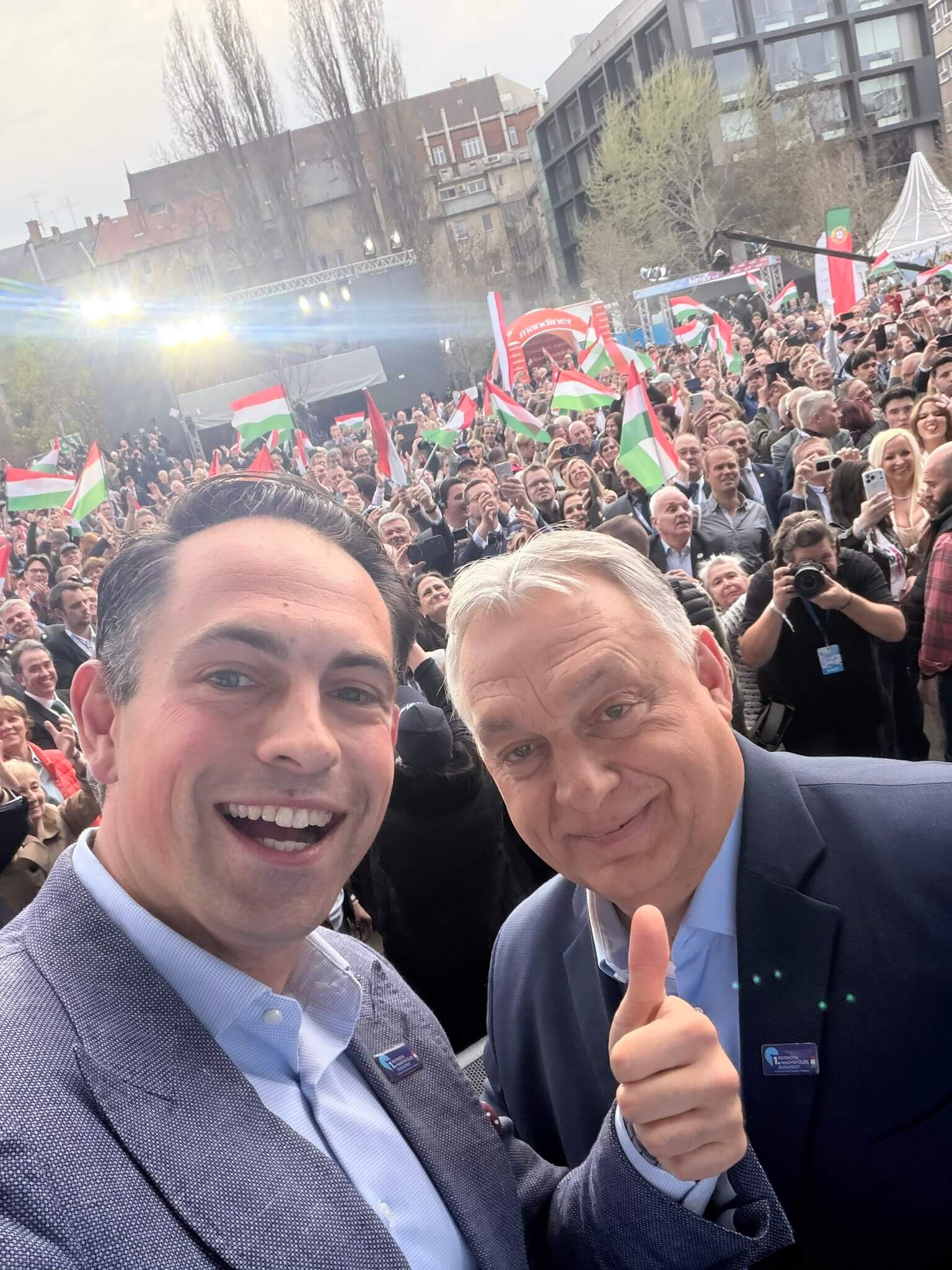

Voters across Hungary went to the polls on Sunday in a high-stakes parliamentary election that could redefine the country’s political direction and its relationship with the European Union. The vote will determine the composition of the 199-seat National Assembly, with the outcome closely watched both domestically and across Europe.
Polling stations opened at 6:00 a.m. local time, marking the beginning of a nationwide vote in which citizens cast two ballots—one for individual constituency candidates and another for national party lists. Under Hungary’s electoral system, 106 seats are decided by constituency winners, while 93 seats are distributed proportionally based on party lists.
A Tight Race Between Orban and Magyar
At the center of the contest is long-serving Prime Minister Viktor Orbán, leader of the ruling Fidesz, who has held power for 16 years. Challenging him is opposition figure Péter Magyar, heading the Tisza Party.
Recent opinion polls suggest a competitive race, with some indicating a slight lead for Magyar. However, analysts point to a significant proportion of undecided voters, leaving the final outcome uncertain.
After casting his vote in Budapest, Orbán struck a confident tone, telling reporters he was “here to win” and emphasizing his commitment to defending Hungary’s sovereignty within the EU framework. He reiterated opposition to what he described as “centralization in Brussels,” calling for respect for national rights under EU treaties.
Campaign Rhetoric Reflects Deep Divisions
Magyar, meanwhile, framed the election as a fundamental choice for the nation. Speaking to journalists after voting, he described the contest as one between “East and West, propaganda and honest public discourse, corruption and clean governance.” His remarks underscore the stark ideological divide shaping the campaign.
Magyar also dismissed claims that unrest could follow a potential defeat, calling such narratives “fear-driven misinformation.” He went further, alleging that such rumors originated from foreign advisory influences linked to Russia—a claim that adds a geopolitical dimension to the already tense political atmosphere.
Voter Turnout Signals Strong Engagement
According to data released by the National Election Office, voter turnout reached 66.01% by 3:00 p.m. local time, reflecting strong public engagement in what many consider a decisive election.
Orbán used social media to urge participation, warning that Hungary’s “peace and security may depend on a single vote.” Similarly, Magyar encouraged citizens to turn out in large numbers, describing the election as a “historic moment” for the country.
Electoral Thresholds and Government Formation
To enter parliament, parties must secure at least 5% of the national vote, with higher thresholds applied to coalition lists. Ultimately, any party or alliance that wins at least 100 seats will be able to form a government.
Hungarian citizens residing abroad without a domestic address are eligible to vote only for party lists, while residents within the country can cast both ballots.
Broader Implications for Europe
The outcome of the election is expected to have far-reaching consequences beyond Hungary’s borders. Analysts suggest it could influence the country’s stance on EU policies, regional security issues, and its diplomatic positioning between East and West.
Voting is scheduled to continue until 7:00 p.m., after which preliminary results are expected to be released. As Europe watches closely, the election stands as a defining moment not only for Hungary’s future but also for the broader political balance within the European Union.
[…] Hungary Faces Tight Vote After Orbán Era Hungary Hungary Votes in High-Stakes Parliamentary Election Asia Europe Questions NATO’s Future Without […]