



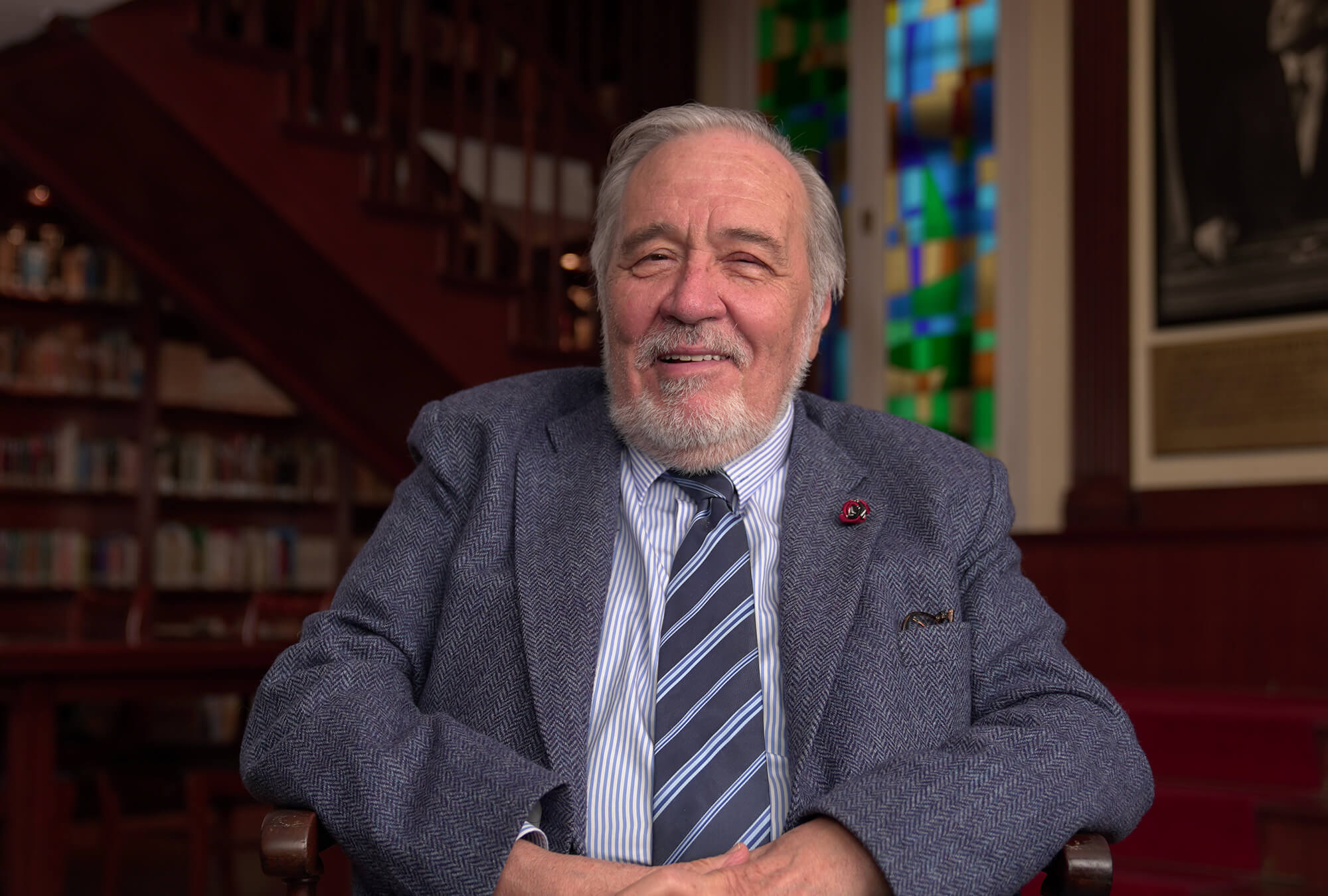

Prof. Dr. İlber Ortaylı, one of Turkey’s most influential historians and public intellectuals, has passed away at the age of 78 while receiving treatment in hospital. His death on March 13, 2026, marks the end of an era for Turkish academia and Ottoman historical studies, where he was widely regarded as a leading authority.
Often described as a “walking library” due to his vast knowledge and intellectual depth, Ortaylı’s passing has left a significant void not only in Turkey but also in international scholarly circles.
Early Life and Academic Foundations
Born on May 21, 1947, in Bregenz, Austria, Ortaylı was the child of a Crimean Tatar family. His mother, Şefika Ortaylı, was a respected academic in Russian Language and Literature, while his father, Kemal Ortaylı, was an engineer with a strong interest in Crimean history.
His family relocated to Turkey when he was just two years old. Ortaylı began his education at the Austrian High School in Istanbul and later continued at Ankara Atatürk High School.
He graduated in 1969 from both Ankara University’s Faculty of Political Sciences and the Faculty of Language, History and Geography. He later pursued graduate studies at the University of Chicago, where he worked under renowned historian Halil İnalcık—a key influence on his academic development.
In 1974, he earned his doctorate with a thesis on post-Tanzimat local administrations, establishing himself early as a specialist in Ottoman administrative history.
Distinguished Academic Career
Ortaylı became a professor in 1989 and led the Department of Administrative History at Ankara University for over a decade. His academic reputation extended globally, with visiting positions at prestigious institutions including Vienna, Cambridge, Oxford, and Rome.
Between 2005 and 2012, he served as the director of the Topkapı Palace Museum, where he contributed significantly to the preservation and interpretation of Ottoman heritage.
Even after retirement, Ortaylı continued teaching at Galatasaray University and Bilkent University, inspiring younger generations with both historical insight and broader intellectual perspectives.
Major Works and Intellectual Contributions
Throughout his prolific career, Ortaylı authored dozens of influential books and academic papers. Among his most notable works are:
- “The Longest Century of the Empire” (1983)
- “Rediscovering the Ottomans” series (2006–2007)
- “Ottoman Peace” (2004)
- “How to Live a Life” (2019)
- “History of the Turks” (2015–2020)
His 1979 work on Turkish administrative history is considered one of the first comprehensive studies in the field, although specific academic citations vary by edition.
In recognition of his contributions, he received the Aydın Doğan Award (2001) and the Presidential Culture and Arts Grand Award (2017).
Multilingual Scholar and Cultural Figure
Ortaylı was known for his extraordinary linguistic abilities. He spoke German, French, English, Italian, Russian, and Persian fluently, while also possessing knowledge of Latin, Hebrew, Ancient Greek, and Slavic languages.
Beyond academia, he became a prominent public figure through television programs, lectures, and interviews, making history accessible to wider audiences.
Personal Life and Final Years
In 1981, Ortaylı married Ayşe Özdolay, with whom he had a daughter named Tuna. The couple later divorced in 1999.
In his final years, Ortaylı faced several health challenges, including diabetes and kidney disease, requiring regular dialysis treatment. Reports indicate that he had been in intensive care for several days prior to his passing due to complications related to his condition.
A Lasting Legacy in Global Scholarship
The death of İlber Ortaylı represents a profound loss for historical scholarship, particularly in the fields of Ottoman studies, Turkish history, and comparative civilizations.
His lifelong dedication to education, cultural preservation, and intellectual discourse leaves behind a legacy that will continue to shape future generations of historians and scholars worldwide.