



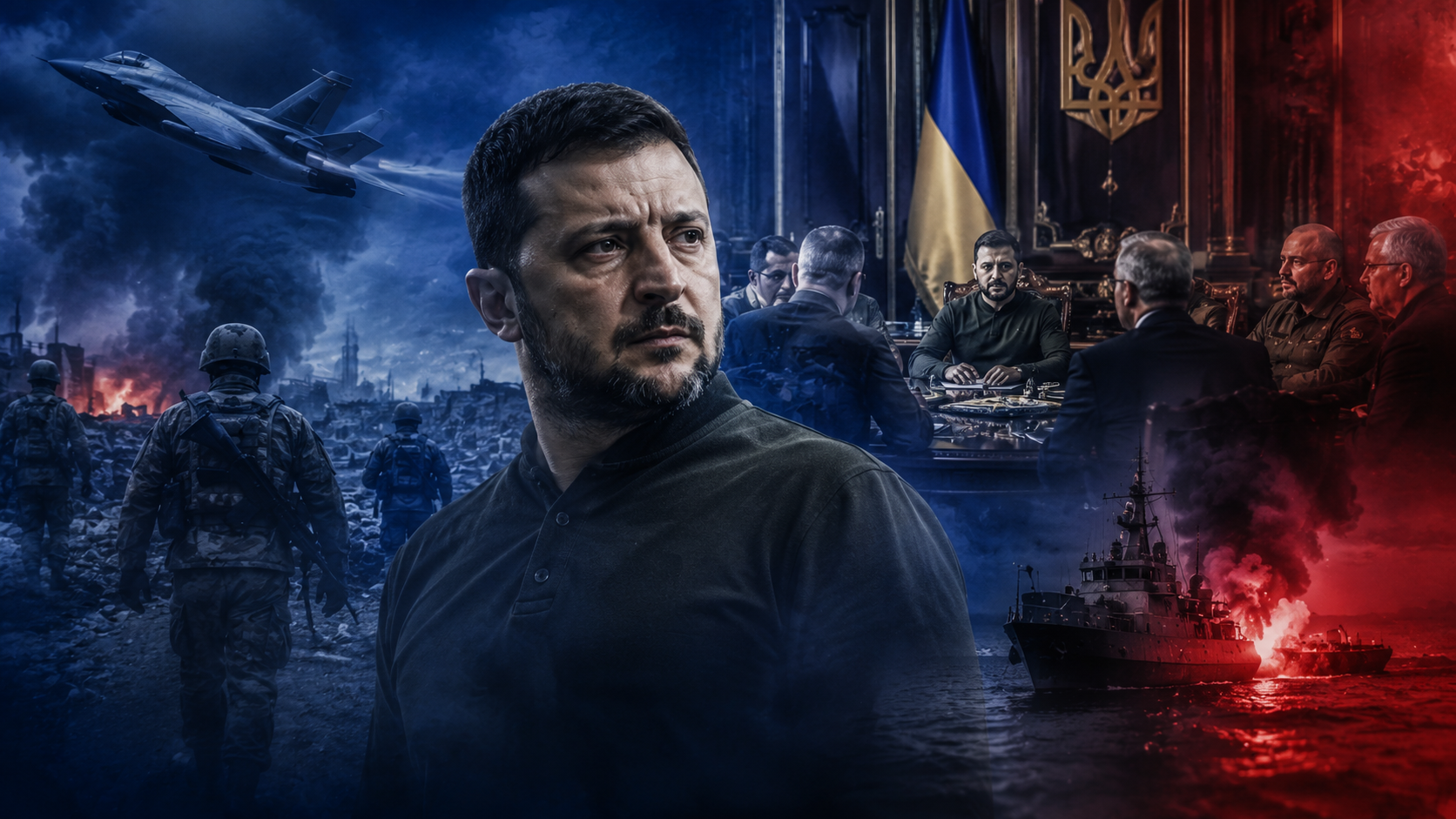

Ukraine entered a pivotal political moment on Thursday as President Volodymyr Zelenskyy pressed ahead with his second major wartime cabinet reshuffle in less than a year, triggering public debate over military leadership while securing fresh defense commitments from the United Kingdom. The sweeping government changes unfolded against the backdrop of an ongoing war with Russia, renewed diplomatic efforts led by Turkey, and escalating military operations in the Black Sea.
The most controversial decision in the overhaul was the dismissal of Defense Minister Mykhailo Fedorov, a reform-oriented official widely credited with accelerating Ukraine’s drone warfare capabilities, digitizing defense procurement, and reducing bureaucracy. His departure has drawn criticism from opposition figures, civil society groups, and military analysts, with demonstrations reported in Kyiv shortly after the announcement.
Parliament Approves New Government
Ukraine’s parliament approved Sergii Koretskyi, the former chief executive of state energy company Naftogaz, as the country’s new prime minister. President Zelenskyy argued that Koretskyi’s extensive experience in the energy sector makes him well suited to prepare Ukraine for another difficult winter while maintaining essential public infrastructure during wartime.
The cabinet reshuffle follows the resignation of former Prime Minister Yulia Svyrydenko, whom Zelenskyy thanked for her service before unveiling a broader strategy aimed at strengthening government performance amid prolonged conflict. Officials described the changes as part of a wider effort to improve coordination between civilian institutions and Ukraine’s defense establishment.
Fedorov’s Removal Sparks Rare Public Protests
The dismissal of Fedorov quickly became the focal point of public reaction. The former defense minister earned widespread recognition for expanding Ukraine’s domestic drone production, modernizing battlefield technology, and introducing data-driven military reforms designed to improve operational efficiency.
According to Reuters and the Associated Press, many demonstrators argued that removing one of the government’s most popular wartime officials could undermine confidence in ongoing military reforms. The protests remain relatively limited in scale but represent one of the most visible public challenges to Zelenskyy’s wartime leadership in recent months.
Calls for Unity Within Military Leadership
Addressing criticism surrounding the reshuffle, President Zelenskyy urged greater unity among Ukraine’s political and military leadership. The president acknowledged tensions between Fedorov and Commander-in-Chief Oleksandr Syrskyi, emphasizing that maintaining cohesion remains essential as Ukrainian forces continue defending against Russian military operations.
Before leaving office, Fedorov publicly criticized military leadership, alleging that disagreements over defense reforms had slowed modernization efforts. Analysts cited by international media suggest Zelenskyy ultimately chose to back the military command structure over a reform-minded minister whose political profile had continued to grow during the war.
United Kingdom Announces New Fighter Jet Funding
While domestic politics dominated headlines in Kyiv, British Prime Minister Keir Starmer used his final official visit to Ukraine to announce a €300 million funding package that will help Ukraine acquire 16 Swedish-made Gripen fighter jets.
The funding supports a previously announced agreement between Ukraine and Swedish aerospace manufacturer Saab and represents one of Starmer’s final foreign policy initiatives before leaving office. The aircraft are expected to significantly strengthen Ukraine’s air defense capabilities as Russian missile and drone attacks continue across the country.
During the visit, President Zelenskyy awarded Starmer Ukraine’s Order of Freedom, praising Britain’s consistent military and diplomatic support since Russia’s full-scale invasion. The two leaders also honored fallen Ukrainian soldiers during a ceremony at Kyiv’s Wall of Remembrance.
Black Sea Conflict Intensifies
Military activity has also escalated in the Black Sea and Sea of Azov, where both Ukraine and Russia have increased attacks targeting maritime infrastructure and shipping routes critical to grain exports.
According to Ukrainian officials, recent drone operations have targeted Russian oil tankers, cargo vessels, and support ships as Kyiv seeks to disrupt Russian logistics and reduce Moscow’s operational flexibility around occupied Crimea. Meanwhile, Russia has intensified strikes on Ukrainian ports in the Odesa region, threatening infrastructure vital to Ukraine’s wartime economy and international grain exports. These developments have contributed to renewed volatility in global wheat markets.
Turkey Renews Mediation Offer
Amid the continuing conflict, Turkey Foreign Minister Hakan Fidan renewed Ankara’s offer to host peace negotiations between Ukraine and Russia during a visit to Kyiv.
Fidan said there was no justification for a major war in Europe continuing into its fifth year and reiterated Turkey’s willingness to facilitate direct talks between the two sides. Ukrainian Foreign Minister Andrii Sybiha responded by saying President Zelenskyy would be prepared to meet Russian President Vladimir Putin in Turkey if meaningful negotiations became possible.
However, Kremlin spokesperson Dmitry Peskov said there were currently no immediate prospects for resuming formal peace negotiations, underscoring the significant diplomatic obstacles that remain despite continued international mediation efforts.