





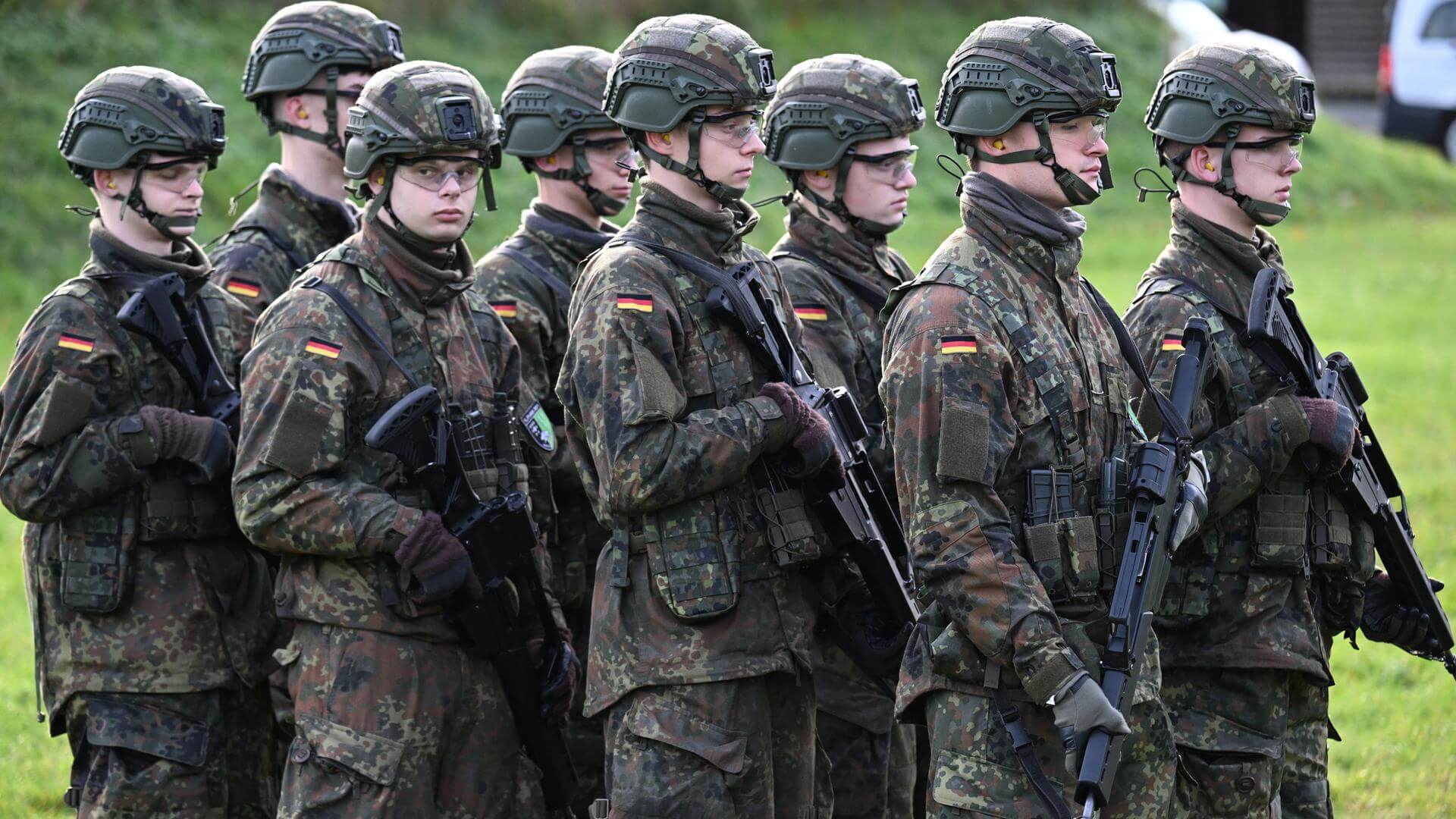

Germany has introduced a controversial update to its Military Service Act, requiring men aged 17 to 45 to obtain official approval before traveling abroad for more than three months. The measure, which took effect on January 1, 2026, is part of a broader effort to restructure and expand the country’s armed forces.
According to the German Defence Ministry, the regulation is tied to the Military Service Modernisation Act, a legislative package designed to strengthen the Bundeswehr amid rising geopolitical tensions in Europe. The move has quickly triggered debates over civil liberties, human rights, and the role of government authority in citizens’ private lives.
What the New Law Requires
Mandatory Approval for Extended Travel
Under the revised framework, young men must notify and receive consent from a Bundeswehr career center if they plan to leave Germany for longer than three months. While officials emphasize that military service remains voluntary, the legal wording introduces a formal obligation that did not previously exist in peacetime conditions.
The updated clause expands the reach of Paragraph 3 of the Conscription Act, which traditionally governed compulsory service only during national emergencies. Now, these provisions apply even outside a declared state of defense.
A spokesperson for the Defence Ministry stated that approvals are “generally granted in principle” under current voluntary service rules. However, the legal requirement itself remains in force, creating uncertainty for those planning long-term travel, such as students, expatriates, or gap-year participants.
Europe’s Military Shift Post-Ukraine War
The legislative shift comes amid heightened security concerns following Russia’s invasion of Ukraine, which has reshaped defense strategies across Europe. German authorities argue that maintaining a clear record of citizens eligible for service is essential in case of future emergencies.
The government aims to expand the Bundeswehr’s personnel from approximately 184,000 troops to between 255,000 and 270,000 by 2035. As reported by Frankfurter Rundschau, the new law also includes broader registration systems and mechanisms for faster mobilization.
A Defence Ministry representative told IPPEN.MEDIA:
“In an emergency, we must know who is potentially abroad for extended periods.”
Human Rights Concerns and Public Backlash
Critics Warn of Deep Intrusion
Despite official justifications, critics argue the law represents a significant intrusion into personal freedom. The Defence Ministry itself has acknowledged the measure’s “profound impact” on individual autonomy.
From a human rights perspective, the requirement raises serious questions about freedom of movement, a fundamental principle in democratic societies. Observers warn that such policies risk normalizing state control over civilian life, especially when implemented outside wartime conditions.
Protests Across Germany
The law has sparked visible protests across Germany, with many citizens—particularly young men—voicing opposition. Demonstrators argue that political leaders are prioritizing military expansion over peace-building efforts.
This growing dissatisfaction highlights a broader sentiment: while governments often claim limited resources for social welfare or diplomacy, they appear willing to allocate vast funding and authority when it comes to military readiness.
A Political and Ethical Debate
The controversy underscores a deeper issue in modern European politics. Critics argue that political leadership continues to fall short in advancing global peace, yet rapidly mobilizes resources for defense and conflict preparedness.
This contradiction has fueled skepticism among the public, particularly in Germany, where historical sensitivities around militarization remain strong. The perception that policymakers are imposing restrictive measures without transparent communication further intensifies public distrust.
Unclear Enforcement and Future Implications
As of now, the government has not fully clarified the penalties for non-compliance, leaving citizens in a legal gray area. Additional administrative guidelines are reportedly in development, but their scope and enforcement remain uncertain.
What is clear, however, is that Germany’s new policy marks a turning point. It reflects a broader European shift toward military preparedness, but also raises urgent questions about the balance between national security and individual freedoms.
In a time when global stability remains fragile, the debate over this law may ultimately define how democratic societies navigate the tension between security and human rights.